

Al Jazeera: Scenarios After the Ruling Party’s Victory in Kosovo’s Elections
02 January 2025 – Pristina / Doha
Author: Saber Halimeh (for Al Jazeera), Translation and adaptation: Berzat Berzati for Kosova.info (Srb.Bos./ Alb.)
Throughout 2025, Kosovo went through more than 50 failed attempts to form a government, which ultimately led to early parliamentary elections held on December 28, in the hope of breaking the country’s political deadlock.
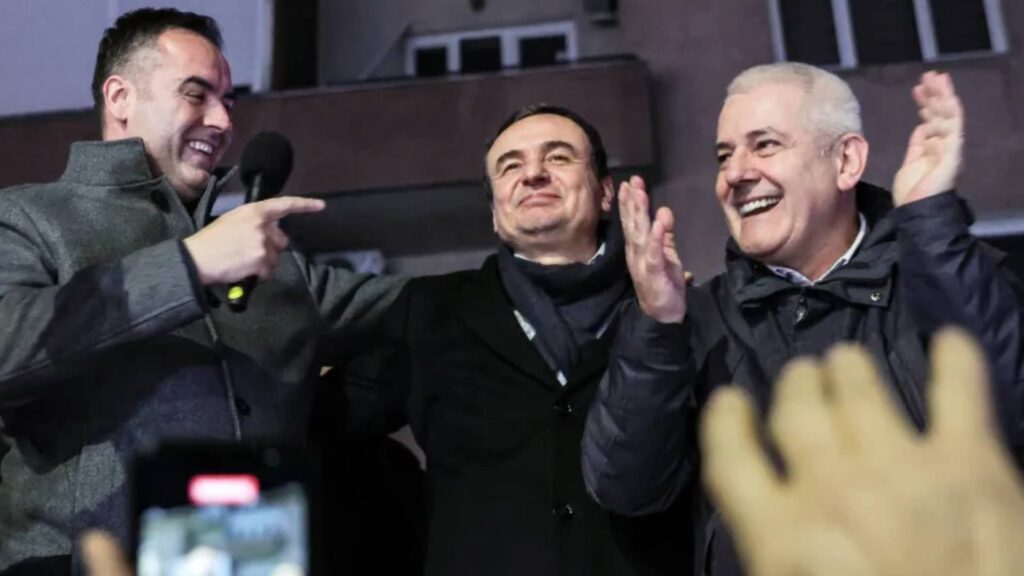
Preliminary results showed a landslide victory for the Vetëvendosje (Self-Determination) Movement, led by Prime Minister Albin Kurti, which secured 49.3% of the vote, according to the latest, still unofficial figures.
This result guarantees Kurti at least 56 of the 120 seats in parliament. Ethnic minority representatives hold 10 reserved seats and traditionally support the winning party, giving Kurti a total of 61 seats—enough to form a government without coalition partners. In addition, around 70,000 diaspora votes have yet to be counted, which could further increase his margin of victory.
Toward the European Union
In a post on X, Kurti thanked the people of Kosovo for granting him what he described as an “overwhelming mandate,” stressing that “Kosovo’s future is prosperous and firmly oriented toward the European Union.”
President Vjosa Osmani said she expects the new parliament and government to be formed quickly, calling for immediate priority to be given to adopting the state budget and ratifying key international agreements.
Osmani warned that delays in forming institutions could jeopardize up to one billion euros in international funding, including EU growth funds and agreements backed by the World Bank.
At the European level, EU foreign policy chief Kaja Kallas stated that Kosovo must move forward with the necessary reforms, adding: “After the political stalemate that followed the February 2025 elections, we look forward to the swift formation of a new parliament and government.”

Cautious Optimism
Political analyst Dr. Sedri Ramabaja, director of the Albanian Institute for Geopolitics, noted that the early parliamentary elections were held after nearly a year of institutional paralysis caused by the inability to form an effective government. The current results, he said, show a decisive victory for the Self-Determination Movement, fundamentally changing the political and normative context of the stalemate.
Speaking to Al Jazeera, Ramabaja explained that Kosovo’s political deadlock in 2025 was not merely the result of parliamentary calculations, but a deeper crisis of political legitimacy and consensus-building culture.
He added that the refusal to form effective institutions—despite election results—turned political pluralism into a tool of obstruction. As such, the recent elections were not just a procedural mechanism to exit the crisis, but also a normative test of the political system’s ability to respect the will of citizens.
In the same context, Berzat Berzati, editor-in-chief of the independent Kosovo Info agency, said that the contours of the new political situation would become clear quickly, reducing the likelihood of prolonged institutional paralysis.
With the advance of the Self-Determination Movement and the possibility of surpassing the 50% threshold, Berzati expressed optimism about forming a new government shortly after the new parliament is constituted, along with the rapid establishment of parliamentary committees—something that did not happen in the previous term.
He suggested that a realistic timeframe for this would be the beginning of the third week of the current month, especially given the support of minority parties (excluding the Serbian List), which could help accelerate the process.
Berzati expects Kosovo to be more stable in 2026 than it was last year, while acknowledging that stability will not come automatically. He sees the presidential elections as the key test of 2026.
The veteran journalist emphasized that the main test for the next government will be how quickly it responds to issues that directly affect citizens, such as the economy, investment, public services, and security.
Relations With Serbs
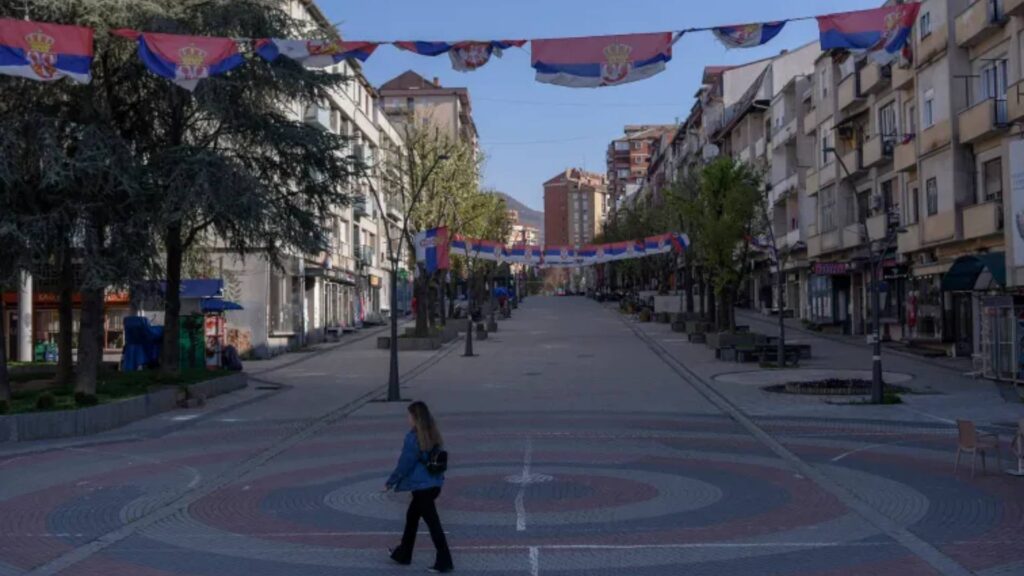
Regarding relations with the Serbian minority in northern Kosovo, Berzati said no major shift in overall policy is expected. Kosovo will continue to expand its institutions and enforce its laws, with greater emphasis on day-to-day governance—services, administration, and revenue collection—and less on high-profile political rhetoric.
He highlighted January 15 as a key date, when stricter residency rules for foreign workers in Kosovo will come into force, including teachers, doctors, businesspeople, and students. New rules will also apply to vehicles with Serbian license plates, effectively taking many of them off the roads.
The healthcare and education sectors, which operate under the Serbian system, are among the most sensitive in the north, raising the risk of renewed tensions.
Ramabaja added that the Serbian minority in northern Kosovo is being “politically instrumentalized,” arguing that Belgrade has sought to turn it into a “fifth column” to keep Kosovo a non-functional state.
He stressed that the Serbian minority is no longer treated as a negotiable issue, but as a practical test of sovereignty, and that Kosovo’s policy toward it will measure the shift from fragmented, negotiated sovereignty to fully effective state sovereignty.
Improving Relations
Asked about the future of Kosovo’s relations with the United States and the European Union, Ramabaja said the issue goes to the heart of the interaction between internal legitimacy and international acceptance. He argued that while the Self-Determination Movement’s victory does not automatically resolve tensions with the EU and the US, it fundamentally changes the nature of those relationships.
He described EU sanctions as “entirely unjust,” driven by pro-Serbian pressure within the Union, and said the postponement of strategic dialogue by the US had a broader political rationale.
Last month, President Osmani announced that the EU had decided to lift sanctions imposed on Kosovo in 2023 following tensions in the north, after an EU–Western Balkans summit.
According to Ramabaja, the election results give the government a strong democratic mandate, meaning that Pristina’s policies can no longer be dismissed as mere governmental deviations, but must be understood as an expression of broad popular consensus.
Berzati, for his part, linked improvements in relations with Kosovo’s main allies—the US and the EU—to the absence of new actions that could inflame tensions in the north. He said lifting EU sanctions and opening financial aid packages could support development projects and budget planning.
As for relations with the US, Berzati noted that although Washington has suspended its strategic dialogue with Kosovo, steps such as Kosovo’s temporary acceptance of a limited number of deportees from the US send a signal of its desire to remain a reliable partner.
He concluded that northern Kosovo remains the most likely factor complicating relations with both the EU and the US, and that tone and implementation are just as important as the measures themselves.